Product Knowledge Is Your
Most Valuable Digital Asset
Content created to help people, built from genuine expertise and first-hand knowledge, is rewarded by search engines for years to come. That principle has expanded far beyond search. Product Knowledge should not be viewed as content. It should be viewed as intellectual property. Unlike advertising, campaigns, paid traffic, and temporary content, Product Knowledge becomes an appreciating business asset. The more knowledge a business captures, the more valuable the business becomes.
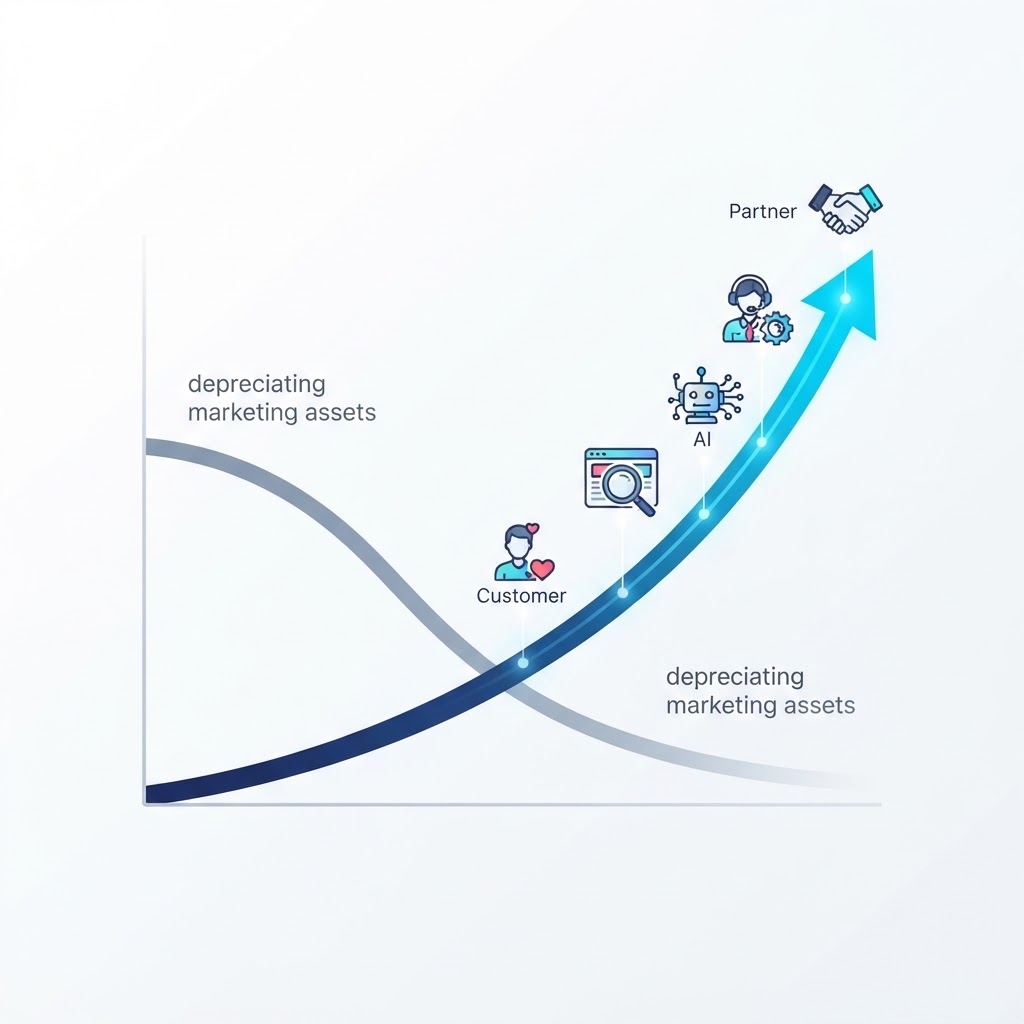
Most Marketing Assets Depreciate
Content created to manipulate rankings rather than to help people would eventually be penalized. The same truth applies to every marketing asset built on temporary tactics. Advertising disappears when the campaign ends. SEO campaigns lose value when rankings change. Social media posts vanish as the feed moves on. Product Knowledge is fundamentally different — it appreciates. Every answer published teaches customers, AI systems, employees, and future buyers simultaneously, increasing business value rather than decaying.
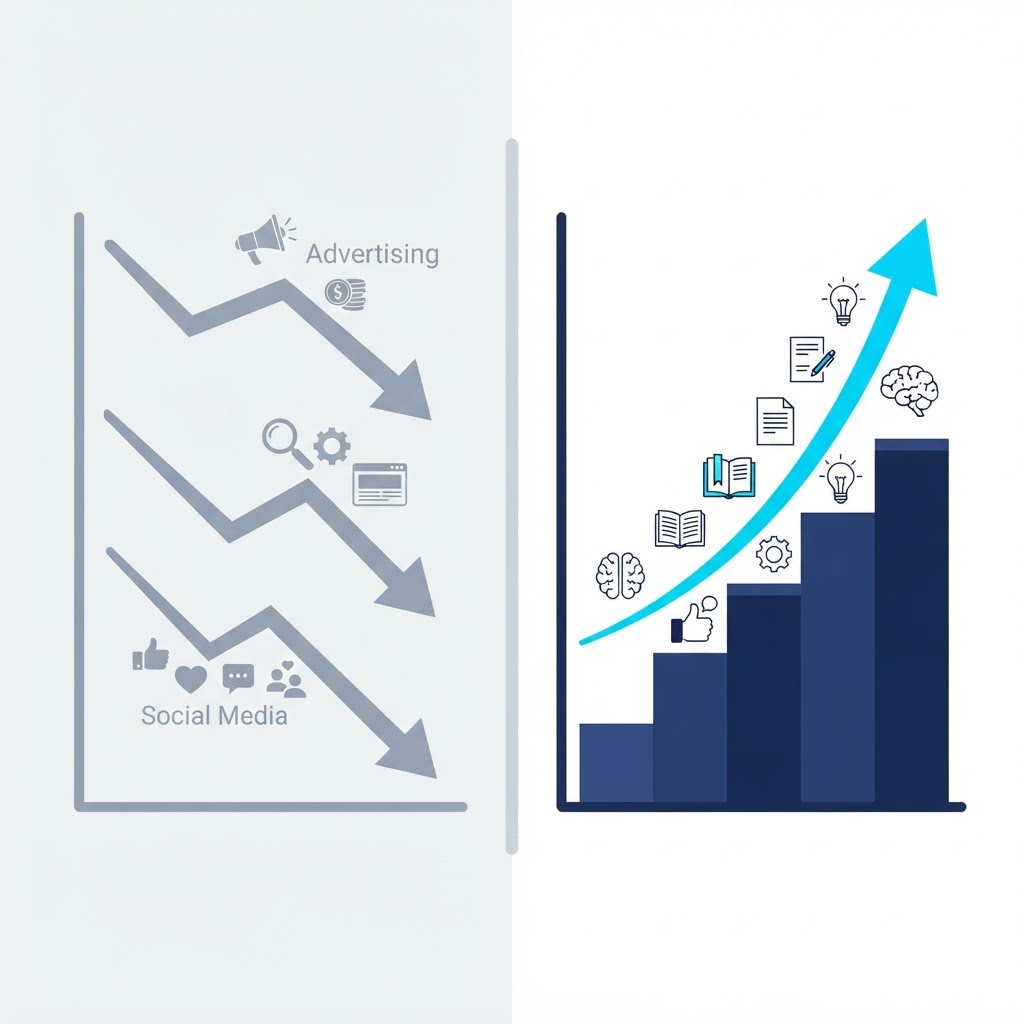
Depreciating Assets
Advertising
SEO Campaign
Social Media
Appreciating Asset
Customers Learn
Published answers help every future buyer.
AI Learns
AI systems retrieve and cite your knowledge.
Employees Learn
Captured expertise trains every new hire.
Future Customers Learn
Knowledge compounds across every product and category.
Business Value Increases
The asset grows while everything else depreciates.
Product Knowledge Is Intellectual Property
Content built from first-hand, deep knowledge is what separates genuinely helpful content from generic content. Product Knowledge is one of the few digital assets that appreciates. Every customer question answered, every expert insight captured, every compatibility guide written, every installation lesson learned, every troubleshooting solution documented, and every buying recommendation created becomes permanent intellectual property — uniquely owned by the merchant and increasingly valuable over time.
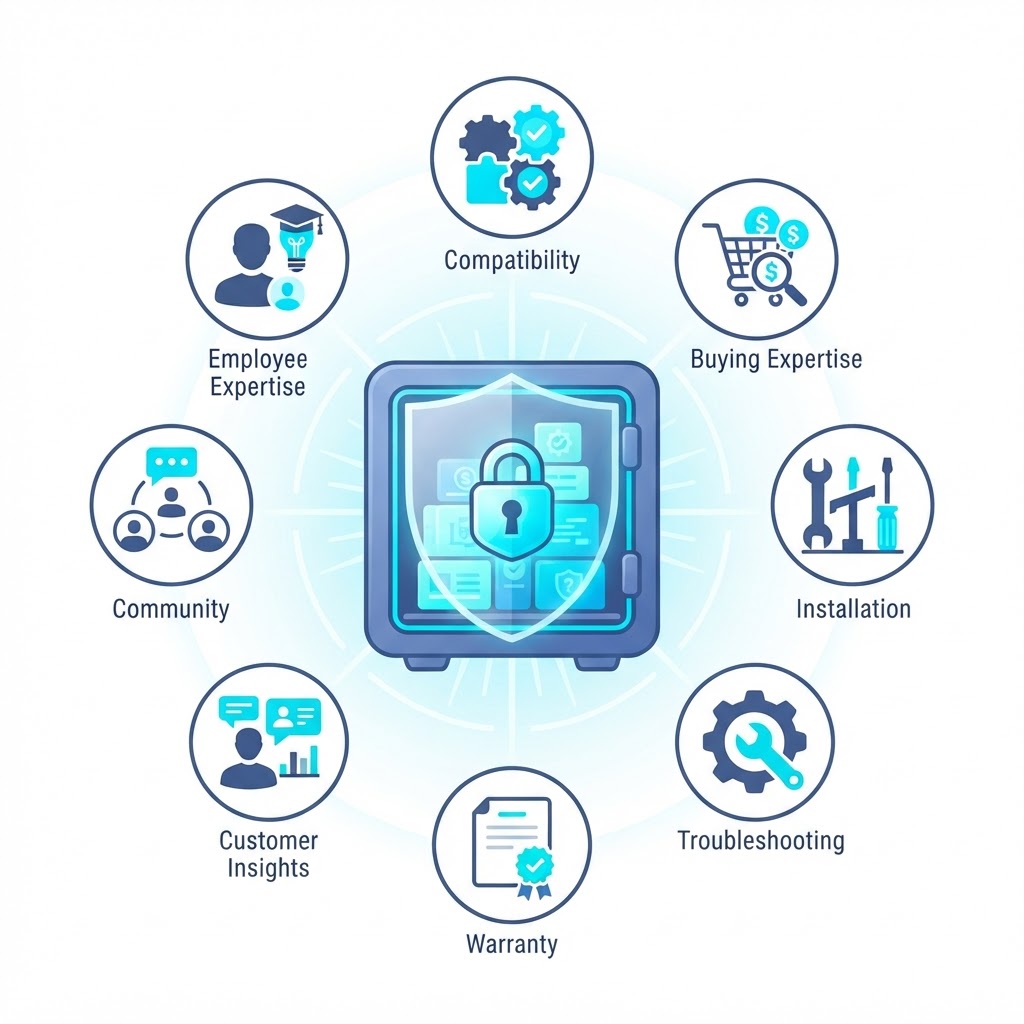
Compatibility Knowledge
Which products work together — expertise that prevents returns and enables purchases.
Buying Expertise
The guidance that helps customers choose the right product for their specific needs.
Installation Experience
Practical knowledge from real-world implementation that no manual captures.
Troubleshooting
Solutions to the problems customers actually encounter — not theoretical ones.
Warranty Explanations
Clear guidance on what is covered, what is not, and how to make claims.
Real Customer Insights
Authentic post-purchase experience that only customers can provide.
Community Knowledge
Peer-to-peer discussions and shared solutions that compound over time.
Employee Expertise
Years of accumulated product knowledge from the people closest to your products.
This knowledge becomes uniquely owned by the merchant. No competitor can replicate the specific expertise your organization has accumulated — the exact questions your customers ask, the exact problems they encounter, the exact solutions your experts provide. This is what makes Product Knowledge intellectual property rather than content: it is built from your unique experience and it belongs to your business.
Product Knowledge Benefits Every Team
People-first content serves the customer first — and the ripple effect is that it serves the entire business. Product Knowledge is not a marketing asset alone. It is an enterprise asset. Every department benefits from the same captured expertise: marketing gets authentic content, SEO gets expertise-based answers, support gets ticket deflection, sales gets objection handling, retail gets in-store guidance, merchandising gets category insights, training gets onboarding material, product management gets customer signals, AI gets structured knowledge, and customers get instant answers.
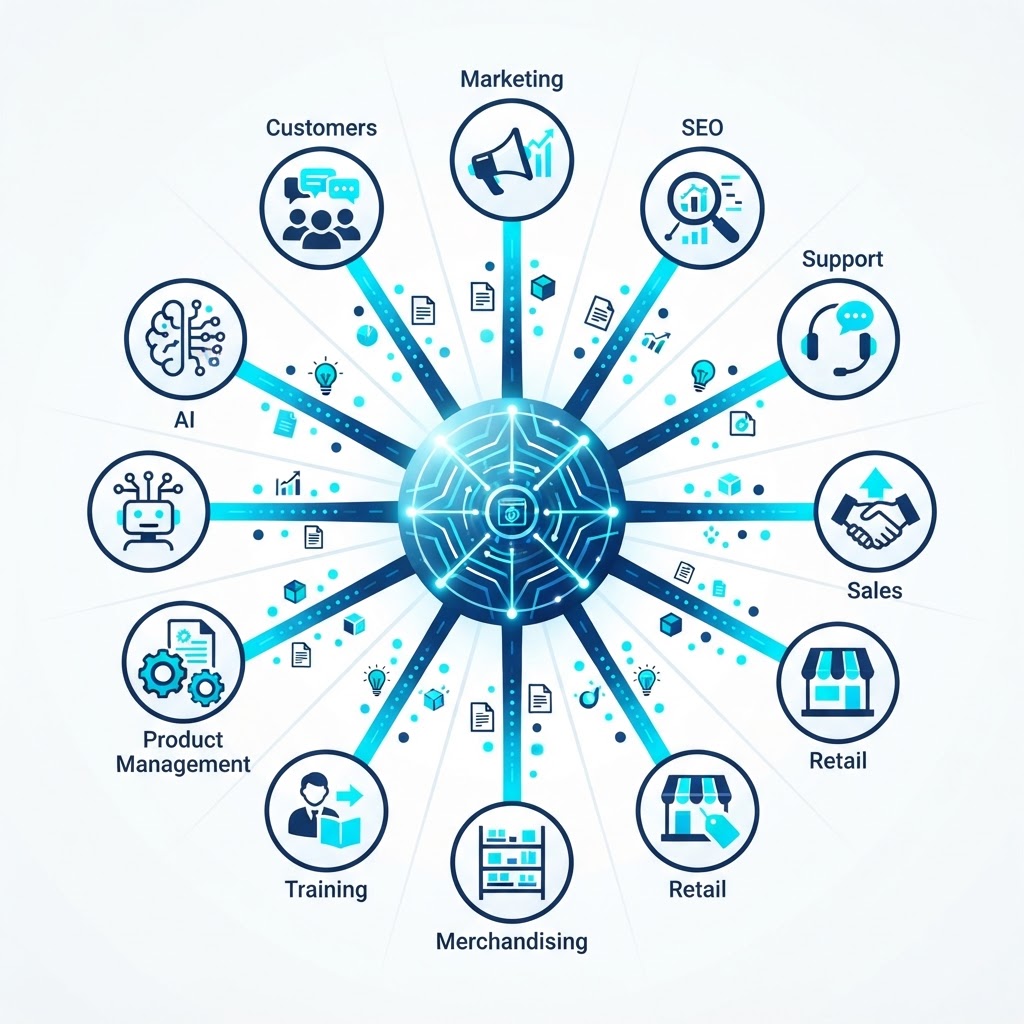
Marketing
Authentic knowledge for campaigns that resonates with real buyer needs.
SEO
Expertise-based content that earns and maintains search rankings.
Customer Support
Published answers deflect tickets and reduce repetitive workload.
Sales
Objection handling and buying guidance that closes more deals.
Retail
In-store associates access the same knowledge as online teams.
Merchandising
Category knowledge informs product grouping and recommendations.
Training
Captured expertise accelerates onboarding for every new employee.
Product Management
Customer questions reveal product improvement opportunities.
AI
Structured knowledge feeds AI assistants and search engines.
Customers
Buyers find answers instantly instead of contacting support.
One asset serves every team. A single expert answer can simultaneously improve a marketing campaign, rank in search, deflect a support ticket, help a sales rep close a deal, train a new employee, inform a product decision, and feed an AI assistant. This is the multiplier effect that makes Product Knowledge fundamentally different from any other marketing investment.
Product Knowledge Creates Enterprise Value
Businesses helping people would be rewarded by search engines for years to come. That reward extends far beyond search rankings. Product Knowledge creates long-term enterprise value across every dimension of the business — customer trust, brand authority, support efficiency, employee onboarding, AI visibility, search visibility, conversions, satisfaction, knowledge retention, and competitive differentiation. Each benefit compounds with the others, making the whole greater than the sum of its parts.
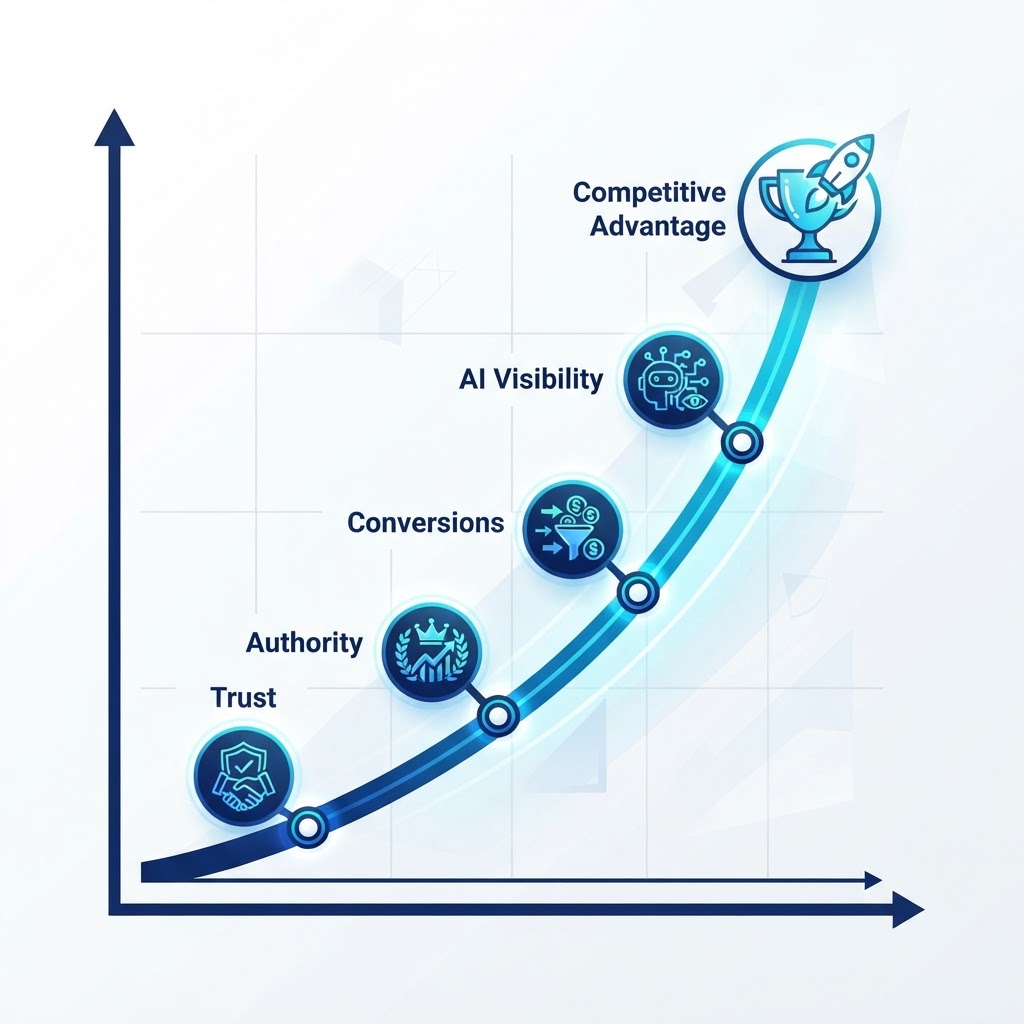
Customer Trust
Buyers trust merchants who answer their questions honestly and completely.
Brand Authority
Your business becomes the authoritative source of knowledge in your category.
Lower Support Costs
Published answers deflect tickets permanently, reducing per-contact costs.
Better Employee Onboarding
Captured expertise trains new hires faster than any manual could.
Better AI Visibility
Structured knowledge gets retrieved and cited by AI systems.
Better Search Visibility
Expertise-based content earns and maintains organic rankings.
Higher Conversions
Answered questions remove purchase hesitation at the moment of decision.
Higher Customer Satisfaction
Buyers find answers instantly instead of waiting for support.
Knowledge Retention
Expertise is captured permanently, not lost when employees leave.
Competitive Differentiation
Accumulated knowledge separates you from competitors who only sell products.
This creates long-term enterprise value. Each benefit reinforces the others: trust drives conversions, conversions drive revenue, revenue funds more knowledge capture, more knowledge drives better AI visibility, better AI visibility drives more traffic, and more traffic drives more customer questions — which feed the next cycle. The asset compounds while competitors spend on depreciating tactics.
Knowledge Is The Competitive Moat
Genuine expertise and first-hand knowledge are what separate helpful content from generic content. In the AI search era, that distinction becomes a competitive moat. Competitors can copy products, pricing, and advertising. But they cannot easily copy years of accumulated Product Knowledge — the specific expertise, customer insights, and community wisdom your organization has captured over time. This is the moat that deepens with every question answered and every expert insight captured.

Competitors can copy products
Product designs, features, and specifications can be replicated.
Competitors can copy pricing
Price matching and promotions are easily duplicated.
Competitors can copy advertising
Ad copy, channels, and creative can be imitated.
Years of accumulated Product Knowledge
The specific questions your customers ask, the exact solutions your experts provide, the genuine experience your community shares — none of this can be copied overnight.
This becomes the modern competitive moat. The deeper your Product Knowledge, the harder it is for competitors to catch up. Every answered question, every captured insight, and every published guide widens the gap — because the competitor would need to answer the same questions, capture the same expertise, and build the same community from scratch. By the time they try, you have already moved further ahead.
The Product Knowledge Balance Sheet
A disciplined process of building, measuring, and improving content systematically. Product Knowledge takes that process to its logical conclusion: it becomes an intangible asset on the business balance sheet. Traditional assets — inventory, equipment, facilities, and patents — depreciate or expire. Product Knowledge is different. It is an increasingly valuable intangible asset that grows with every question answered, every expert insight captured, and every customer helped. The more you invest, the more valuable it becomes.
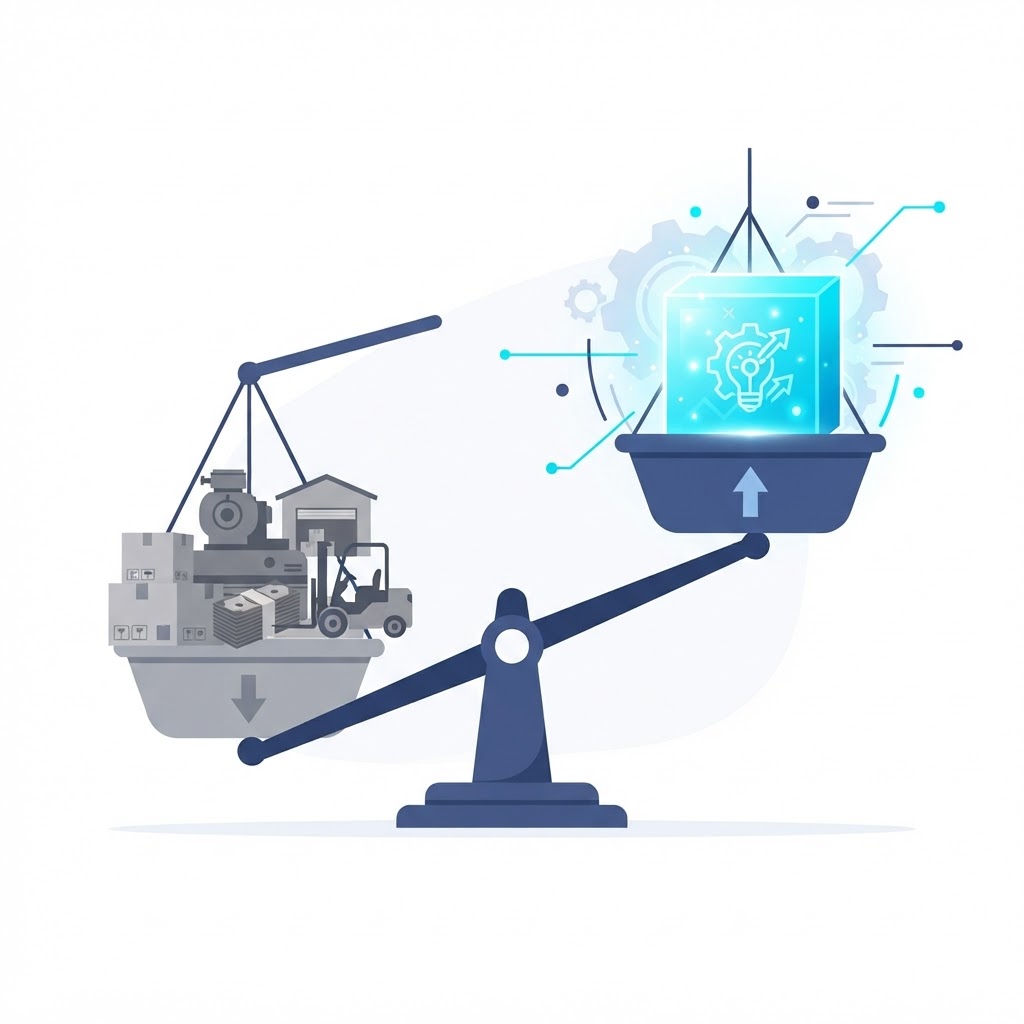
Traditional Business Assets
Inventory
Physical goods that depreciate, require storage, and lose value.
Equipment
Machinery and tools that wear out and need replacement.
Facilities
Physical space that requires maintenance and loses relevance.
Patents
Legal protections that expire and can be challenged.
Product Knowledge
Product Knowledge
Captured expertise that appreciates with every answer published.
Growing Intangible Asset
Increases in value as coverage, quality, and distribution expand.
Product Knowledge is becoming an increasingly valuable intangible asset. As AI systems increasingly reward authoritative knowledge, as search engines prioritize genuine expertise, and as customers expect instant answers, the businesses with the deepest Product Knowledge will command the greatest enterprise value. The balance sheet of the future will weigh knowledge alongside inventory.
How Answerbase Helps Businesses Build This Asset
A disciplined process of understanding demand, creating helpful content, measuring results, and improving. Answerbase operationalizes that process as a complete lifecycle for building Product Knowledge as a business asset. Every stage feeds the next, and the final stage feeds back to the first — so the asset grows continuously, compounding in value with every cycle.

Customer Demand
Capture the questions buyers actually ask.
Knowledge Capture
Route questions to the right experts and capture their answers.
AI Assistance
AI drafts answers from existing data to accelerate capture.
Expert Review
Experts validate, refine, and approve every answer.
Distribution
Publish canonical answers across every channel.
Measurement
Track coverage, gaps, and business value.
Continuous Improvement
Feed results back to prioritize the next gap.
Growing Business Asset
The knowledge base compounds in value over time.
The Future Belongs To Knowledge Companies
Businesses helping people would be rewarded for years to come. That conclusion has expanded to every system that connects buyers and sellers. Future ecommerce leaders will not simply sell products. They will become the authoritative source of knowledge surrounding those products. Customers, search engines, AI systems, employees, and partners will all rely on Product Knowledge — and the businesses that own the deepest knowledge will own the deepest relationships.
Customers
Rely on Product Knowledge to make confident buying decisions.
Search Engines
Rely on Product Knowledge to deliver helpful, expertise-based results.
AI Systems
Rely on Product Knowledge to retrieve and cite authoritative answers.
Employees
Rely on Product Knowledge to serve customers and do their jobs.
Partners
Rely on Product Knowledge to represent and sell your products.
Great companies don't simply accumulate customers — they accumulate Product Knowledge. That knowledge becomes an appreciating business asset that strengthens every customer interaction, every AI interaction, every search result, every employee, and ultimately the long-term value of the business.
Frequently Asked Questions
The core questions about why Product Knowledge is valuable, how it creates enterprise value, and why it becomes a competitive moat.
The Future of Search
Why Product Knowledge replaced traditional SEO — the foundational guide to how search changed and what wins now.
Customer Questions Content Strategy
Why customer questions are the most valuable content you will ever create — and how they compound into a Product Knowledge advantage.
Questions to Product Knowledge
How answering customer questions becomes a continuously improving asset that compounds across AI search, Google search, and revenue.
Product Knowledge Flywheel
Why great Product Knowledge compounds over time — and how the flywheel builds an advantage competitors cannot easily replicate.
Why Expertise Wins
Why Information Gain and genuine expertise have become the most valuable competitive advantage in modern search and AI visibility.
AI Visibility & Discoverability
Why Product Knowledge wins in the age of AI search — and why the businesses with the best knowledge become the most discoverable.
Build a Product Knowledge Strategy
A practical framework for transitioning from content marketing to a Product Knowledge strategy — discover, build, distribute, measure, and improve.
Measuring Product Knowledge
How to measure whether your Product Knowledge is actually improving — beyond rankings, traffic, and content volume.
Product Knowledge Capture
Why Product Knowledge isn’t created — it’s captured. Learn how to continuously capture expertise from every source before it disappears.
Product Knowledge as a Business Asset
Why Product Knowledge is your most valuable digital asset — intellectual property that appreciates while marketing assets depreciate.
The Product Knowledge Organization
Why the next generation of companies will compete on knowledge — and how Product Knowledge becomes an organizational capability, not a marketing initiative.
People-First SEO Guide
How Google's Helpful Content philosophy became the foundation of modern SEO and AI visibility.
Explore the Platform
This article concludes the foundational Product Knowledge curriculum. The next step is to explore the platform capabilities that turn this philosophy into a daily practice — from understanding demand to building, distributing, and continuously measuring your knowledge asset.
Understand Demand
Capture customer and search demand across every channel.
Build Knowledge
Generate, refine, and capture expertise as Product Knowledge.
Distribute Knowledge
Publish canonical answers across every channel and format.
Measure & Improve
Track the health and value of your knowledge asset continuously.
See how Answerbase fits your product knowledge strategy
This is one part of the Answerbase Product Knowledge platform. Request a demo to see how every capability works together.
